If you're into audio and video technology, you're in for a treat. Our home theater articles are chock full of amazing graphics and easy-to-grasp explanations. We've got everything from speakers to projection television, so go ahead -- dive in!

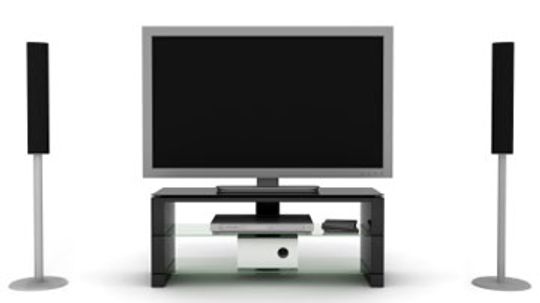
How Home Theater Works
When you’re watching a movie at home, surround sound and proper visual alignment can make all the difference. But how do you set up a professional system without hiring a professional? Learn about the components of a home theater and how to put it all together to create the system that's right for you.

Displays

How Television Works
Television has been around long enough to seem entirely ordinary, but the box that brings TV shows into your home is an amazing device. What kinds of signals are being transmitted? How is the picture formed? Where does the color come from? Find out what's going on inside a TV set.
TV Buying Guide
Not so long ago, the only major decision you had to make when buying a TV was black-and-white or color. Now you have to choose broadcast format, compare half a dozen different TV technologies and comprehend a growing list of extra features. Cut through the confusing jargon with our buying guide.
How SED-TV Works
The surface-conduction electron-emitter display (SED) combines the picture quality of a CRT with the compact design of a flat-screen plasma display. Learn exactly how the SED-TV creates a picture.
How LCoS Works
CRT (Cathode Ray Tube) sets are still what a lot of people think of when they think of TVs, and they can provide a great picture. But if you want a big screen, a flat panel TV or a widescreen model, LCoS (Liquid Crystal over Silicon) may be the right option for you. Learn about the technology behind LCoS.
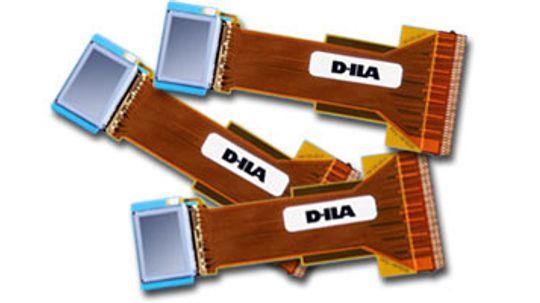
How DLP Sets Work
You no longer have to buy a bulky rear-projection TV to get a big screen, but which technology should you choose? DLP (digital light processing) sets are cheaper and have a better picture than some of the other big-screen options. Learn more about this great way to get maximum screen size for your buck.
How Plasma Displays Work
Think your living room isn't big enough to squeeze in a large-screen TV? The days of needing a mammoth room to suit your video needs are over. Plasma displays fit the components for a huge screen into a unit that's less than 6 inches deep. Learn what "plasma" is and see what's going on inside these amazingly flat displays.
How Projection Television Works
Wonder why you don’t see too many standard TV sets in auditoriums? When the picture has to be BIG, the traditional CRT monitor isn't practical. For an oversized image, projection television is called in. Learn how these video systems produce a high-resolution image for a huge screen.


Audio

How CDs Work
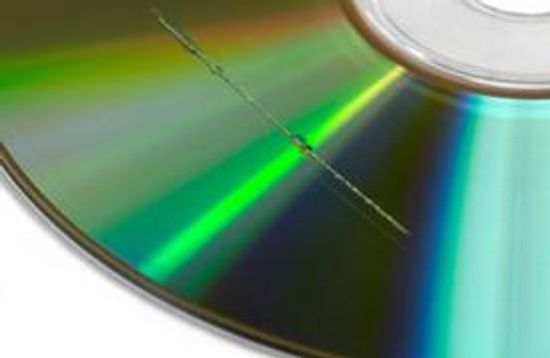
Before compact discs, you had to rewind and fast-forward to get to a particular bit of information. Not so with digital storage -- the incredibly popular CD makes pinpointing data a split-second task. Find out how CDs (and CD-ROMs, CD-Rs, CD-RWs) hold and let you retrieve information.
How Speakers Work
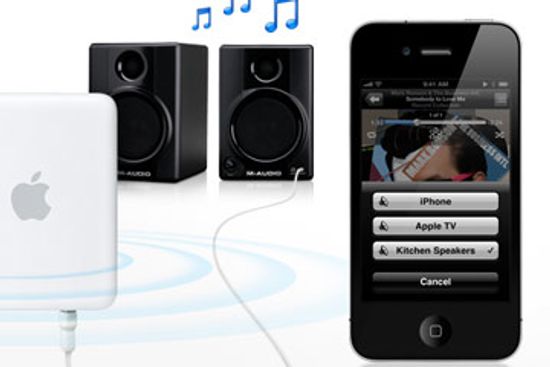
The best amplifier, receiver and CD player won't do you much good, if you don't have good speakers. Speakers are the final step in the stereo process -- the key component that turns electronic data into sound. Learn all about these key components.
How Amplifiers Work
An amplifier may seem like an audio add-on, but your stereo system would be pretty useless without it. Leave out the amp and you'd never be able to hear the music on your CDs (your neighbors might be happier, but would you?). Find out how amplifiers pump it up to 11.
How Surround Sound Works
Surround sound has become an integral part of the movie theater experience, and it's becoming a staple in home theaters, too. There’s nothing like feeling a fighter jet fly by while you’re sitting on the couch. Find out how surround sound puts you in the middle of the action, and learn how you can set it up at home.
How THX Works
When you see the THX logo splashed across a movie screen, you know you're in for an audio feast. But what does that logo mean? Is special equipment being used? Do all movies have THX sound? Find out exactly what THX is and why it improves your movie experience.


Source Equipment

How HD-DVDs Work
DVDs look best on screens that are smaller than 36 inches, so they're not always up to the challenge of today's high-definition (HD) sets. To store and play HD movies, you need a disc that holds more information, like an HD-DVD. Learn how HD-DVDs differ from DVDs and what's happening in the struggle between HD-DVD and Blu-Ray.
How DVDs Work
Wonder why DVDs have become the movie medium of choice? These incredible discs have at least seven times the storage capacity of CDs -- that's why DVD movies can fit in all those "extras," like deleted scenes, multiple formats and directors’ commentary. Find out how DVDs are configured to hold all that data.
How DVRs Work
Digital video recorders like TiVo may be the future of television -– set your own TV lineup, record everything at once, and skip the ads. And if you've heard the DVR catchphrase -- "Pause live TV!" -- you may be wondering just how such a feat is accomplished. Learn all about digital video recorders.
How VCRs Work
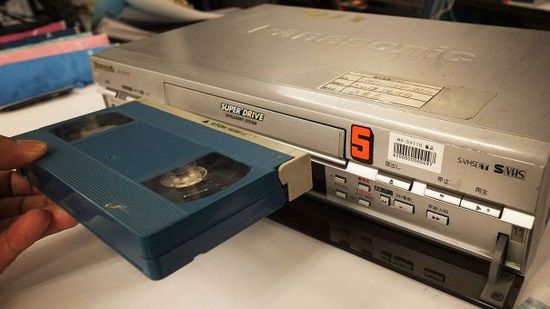
The VCR is one of those devices that seem simple for the outside -- but what's going on behind the scenes is amazing. How can six hours of video fit on a $2 tape? What happens after you slide that tape into the slot? The VCR may be on the way out, but it's still a mechanical marvel. Take a look inside!
How HVD Works
Holographic memory systems offer more storage capacity and faster transfer rates than CDs and DVDs, but they've also been too expensive and complex to mass produce. Learn how the holographic versatile disc (HVD) has improved upon previous methods of holographic storage.
How Blu Ray Works
Say goodbye to DVD as the top-of-the-line digital storage format: It pales in comparison to Blu-ray. New blue-laser discs feature an unbelievable capacity of 27 to 50 GB –- that’s about five times what you can fit on a DVD. Learn about the techniques that make Blu-ray the next big thing in digital video storage and check out its competition.
What is an HD upconverter?
If you’ve heard of an HD upconverter, you’re way ahead of the typical electronics consumer. For most of us, HDTVs, HDTV-ready TVs, HD receivers and HD programming is more than enough HD tech to digest. So what’s this new addition? What exactly are we trying to “upconvert”? Find out what HD upconverters do and why you might want one.
How Video Formatting Works
When you watch a movie on your TV, you're not always seeing exactly the same movie that played in the theater. In fact, sometimes the differences are pretty drastic. A lot of video formatting is necessary to fit a movie onto a TV screen. Learn about the changes a movie goes through so you can watch it at home.


TV Signals

How Television Works
Television has been around long enough to seem entirely ordinary, but the box that brings TV shows into your home is an amazing device. What kinds of signals are being transmitted? How is the picture formed? Where does the color come from? Find out what's going on inside a TV set.

How Remote Controls Work
In WWII, remote controls detonated bombs for the first time. Now some of us spend an hour looking for the remote before we remember there are buttons on the TV. Find out the difference between a "universal" and a "learning" remote and check out some of the other high-tech features you can find on remotes today.
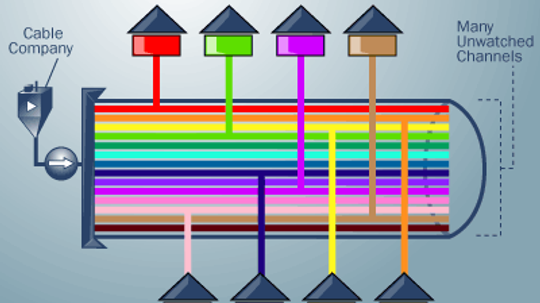
How Cable TV Works
Millions of people receive their television signal through a cable TV connection. Most of them don't actually know what "cable TV" is, what it does or how it got its name. Find out all about this common television signal.
How Digital TV Works
If the analog television signal is getting old, DTV is the answer. Digital television boasts up to 10 times the detail of regular analog TV, and DTV stations are on the air in full force. Find out all about this top-of-the-line format and the future of television.
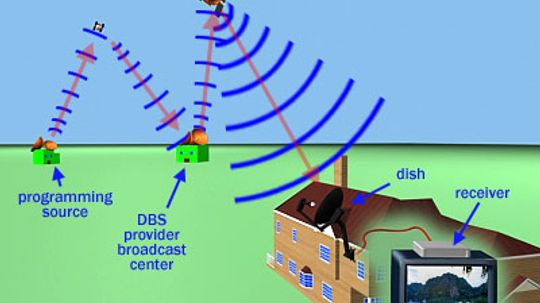
How Satellite TV Works
Satellite TV once required a huge eyesore of a dish positioned on the lawn. These days, you can receive the digital satellite signal with a tiny bowl attached to your roof, and the cost can be even less than for digital cable. Find out how the TV signal gets from the station to the satellite to your home.
How Slingbox Works
Most of us don't even consider the possibility of viewing our cable TV, TiVo or DVD player when we're away from home, but Sling Media's “placeshifting” technology allows you to do just that. Learn about the technology behind Slingbox, how to set it up and what the future holds for this remote viewing device.