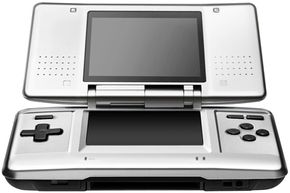
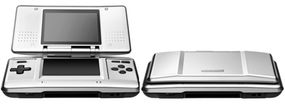
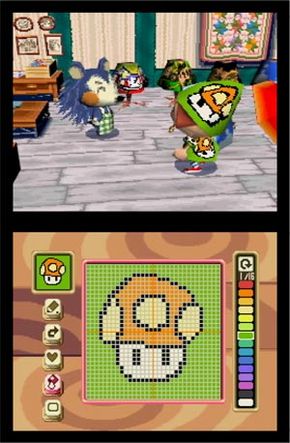
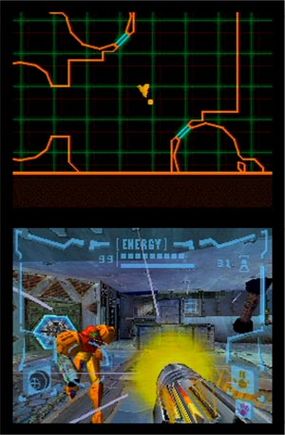
With the DS, Nintendo takes a step back from the better-graphics, faster-processors race that has been the dominant force for change in the video game industry. The company's leaders say that the industry is running into a dead end by only offering consumers better looking games without any real innovation in the paradigm of the gaming machine.
Nintendo's big bet is that what people want is something truly new and something fun. With the DS, Nintendo is trying to offer consumers the ability to experience video games in whole new ways. According to Reggie Fils-Aime, Nintendo of America's executive vice president of sales and marketing, "We've figured out the magic of what makes portable game play so attractive to consumers. We've defeated nine challengers (other handheld systems) and once again we're prepared to win."
The DS is only slightly more powerful than the old N64, but that doesn't bother Nintendo at all. The audience for the DS, Nintendo says, is the older (men and women aged 18-34), causal gamer who traded in his or her Game Boy for a PDA and cell phone; a gamer who doesn't necessarily care whether or not the system renders graphics at record-breaking speeds and in once-impossible detail. Also, the company is hoping that this causal gamer will be more open to a new system that doesn't require the same level of button-pushing expertise as today's newer games. With the DS, Nintendo is trying to jump-start a change in the video game industry, and especially in the handheld industry, that pushes it toward innovative game play and away from hyper-realism. However, not everyone is enthusiastic about Nintendo's plans for change.
Some developers and analysts are weary of putting too much stock in the DS. They say that the success of Sony's PSP might invent a whole new handheld market like the Game Boy did before it. Sony itself is even touting the PSP as this generation's Walkman. But don't plan on that wake just yet -- worldwide, Nintendo has sold more than 14 million units of the original DS since its release.
So what are some techies' biggest complaints? The DS doesn't play media like CDs or DVDs. It doesn't have USB hookups, so every new attachment is useless without the DS. It's not very powerful.
It's hard to sell people on something so new that its capabilities haven't even begun to be realized, especially something that (so far) appears to be nothing more than a two-headed Game Boy. Nintendo's got a hard road ahead of it, and this road's paved with old Virtual Boys, Atari Lynxes and Sega Game Gears.
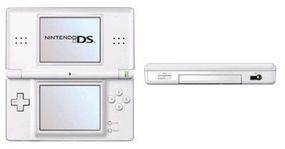
However, no one can argue with Nintendo's past. The company has one of the most recognizable names in the industry, along with a stable of enormously popular titles and a penchant for industry-defining innovations. It's also known for providing great value at lower prices -- the DS is selling for a MSRP of $149.99, less than the PSP's $199 price tag, and the DS Lite goes for $129.99. The Game Boy is one of the most popular toys of all time, and the Game Boy Advance is a top seller in the video game industry -- the fact that the DS is backwards compatible, so it can play Game Boy Advance games in addition to DS games, is a good move. Finally, the DS's wireless capabilities open it up for countless future advancements.
For more information on the Nintendo DS and other video game systems, check out the links on the next page.