When Bob Dylan stepped onto the stage during his 1966 world tour
with The Band behind him, it started a new chapter in rock 'n' roll history. Sure, he'd already plugged in and shocked his hardcore followers a few months before at The Newport Folk Festival. But playing with The Band, who called themselves The Hawks at the time, cemented Bobbie D's momentous shift from acoustic singer/songwriter to bona fide rock star.
Advertisement
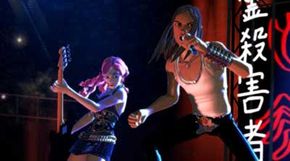
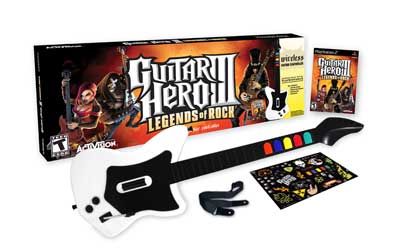
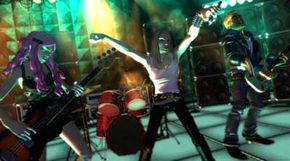
Now, this isn't to say that people who play the über-popular video game Rock Band at home compare to the genius of one of America's greatest musicians, but you get the drift. While Guitar Hero brought out the solo Dylan in millions across the world, Rock Band has given those shredders a backing band.
Before you start hurling your picks at the computer screen, allow us to acknowledge that Rock Band and Guitar Hero are two birds of a different feather. Kind of like the Stones and the Beatles. They share a similar brilliance and lasting influence on today's music, but people will wrestle each other to the ground on who reigns supreme.
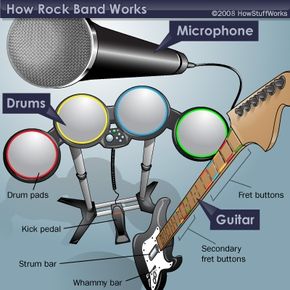
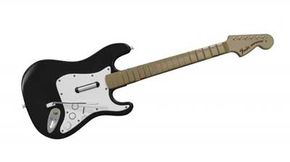
It's difficult to talk about Rock Band without mentioning Guitar Hero because it essentially picks up where the other left off. Adding bass, microphone and drumming peripherals to the guitar, Rock Band takes players closer to actually making their own music. Since the introduction of Rock Band, the publisher of Guitar Hero has released games with additional instruments, too. But Rock Band takes credit for starting the whole-band game craze.
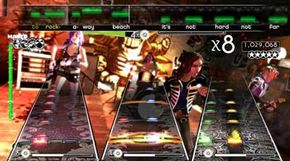
The basic objective of rocking as hard as possible remains relatively unchanged with Rock Band. Only this time, it's a collaborative effort, with anywhere from two to four (or six if you have the Beatles Rock Band game) people jamming in sync. And by taking it from the singular hero to the full band experience, you'll have clashing egos, intraband romance and unrated backstage shenanigans in addition to the pounding notes. Depending, that is, on who joins the group.
How has the public received this change? About as well as Dylan and The Band on that famous tour. In March 2009, a press release from MTV Games, Harmonix and Electronic Arts announced that the Rock Band franchise reached more than $1 billion in sales [source: Beradini].
But we haven't even reached the first chorus of the Rock Band story. Consider the following pages your backstage pass.
Advertisement