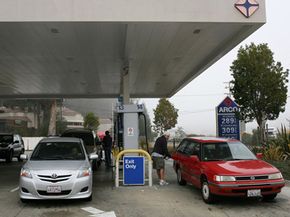
Ever since the meteoric rise of gas prices in 2008, gas mileage has become a top priority. The focus turned not only to the Environmental Protection Agency-rated mileage of our cars, but also to how that mileage could be optimized. It was even an issue in the 2008 U.S. presidential race, when then-candidate Barack Obama suggested that Americans check their tires, since proper inflation can dramatically improve gas mileage.
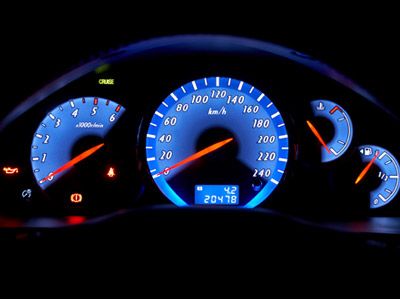
There's a problem with calculating accurate gas mileage, though, and there always has been. Most of us do a simple calculation each time our gas tank hits empty: number of miles on our odometer divided by the number of gallons we can fit in our gas tank. In theory, this provides an accurate assessment of how many miles we can drive per gallon. In reality, the number we come up with is a mere estimate that fluctuates by the tank, and even by the day.
Advertisement
This is perfectly fine for coming up with a rough number, but things start to get hairy when you start trying to improve your gas mileage. How do you know if the techniques or gadgets you're using are working if a rough estimate is all you can get? If your car's mileage varies by about 10 percent based on driving conditions, how do you know if the improvement you see after, say, adding acetone to your gas tank is a result of the additive or of the weather?
Lots of factors affect your car's mileage. For instance, snowy weather requires headlights during the day, wipers and defrosting your front and rear windshields. All this activity uses gas. On the other hand, warm weather might mean activating the air conditioning, which also lowers your mileage. And then there's the fact that gasoline takes up less volume in the cold and expands in the heat, so the amount of gas you can fit in your tank isn't even constant.
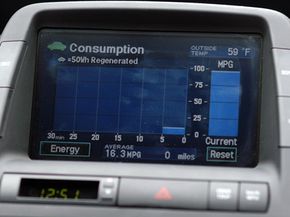
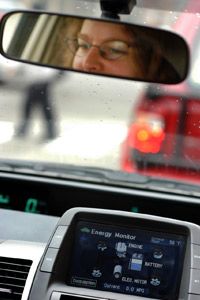
Weather, hills, road conditions and frequency of stoplights all affect how many miles you get per gallon at any given time, so manual calculation after you've gone through an entire tank doesn't do much for determining an increase or decrease in MPG. The solution to this problem is one that briefly popped up in the 1970s due to the gas crisis and then promptly lost favor when prices went back down. It's real-time energy feedback. The concept made a huge comeback when gas prices start averaging $4 a gallon.
In this article, we'll look at several approaches to instantaneous MPG feedback and find out if, and how, they work to improve your car's efficiency.
Let's start off by looking at a few approaches that don't work, one of which we've already mentioned here.
Advertisement