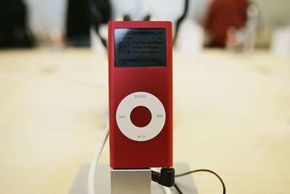
During his shift at Atlanta's Hartsfield-Jackson International Airport, Danny Williams found that something unusual was happening to his pants. They were on fire. The Apple iPod Nano that Williams had in his pocket had caught fire, and the flames reached to his chest. Luckily, Williams was able to put the fire out without suffering any serious physical harm. He told a local news station that he had a piece of coated paper in his pocket, which he believes protected him from being burned [source: WSB-TV].
Advertisement
After Apple heard about the incident, the company asked Williams to send his burned iPod to them and promised to furnish him with a new one. But while Apple reacted quickly to help one of its customers, the company is probably still holding its breath back at corporate headquarters. Williams' burning iPod is just one example of a rash of consumer electronics that have caught fire , costing companies millions of dollars. Williams, you see, is not the first to suffer electronic spontaneous combustion. Cell phones, PDAs, and laptop computers from other companies have also been the source of surprise flames.
A little more than a month before Williams' iPod caught fire, another Georgia man had a close call with his laptop. Douglas Brown's Dell 9200 laptop began to spark while he was using it in his home, and the computer erupted in flames. Brown told ConsumerAffairs.com that "it looked like fireworks, which would have been cool, had it not been in my house" [source: Consumer Affairs].
In 2006, an overhead luggage compartment caught fire on a plane at JFK International Airport in New York thanks to a faulty consumer electronic. This and other similar events prompted the U.S. Department of Transportation to issue a travel warning concerning consumer electronics on planes [source: The Register].
The incidents of electronic devices catching fire are isolated, relatively speaking. But in response to these sporadic outbursts, a number of companies have recalled consumer electronics due to their flammable properties. Millions of laptop computers produced by Dell, Apple and Lenovo have been brought back to the factory and replaced.
So what gives with the flame-ups? It's the batteries. Read the next page to find out why batteries are to blame.
Advertisement