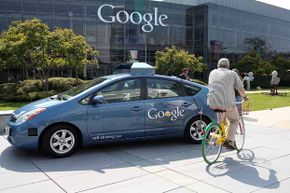
JIM WATSON/AFP/Getty Images
Technology makes our lives better. You're taking a MOOC class, and have your appointments organized on your computer. You watch wepisodes on your internet-capable high-definition television. You pay your bills electronically and save time and money. That's fine and dandy, until someone takes out the electronic banking system and the machines take over the planet.
Sounds crazy? Perhaps. None of the gadgets and innovations we included in our list of 10 scary technologies is likely to rain death and destruction on our little planet, though that doesn't prevent people from being unnerved by them. Read on to find out what weirdness may await in the future.
Advertisement