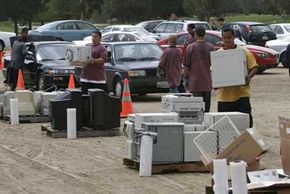
Think back for a minute at the procession of computers, TVs, cell phones, radios, game consoles and music players that have passed through your hands over the years. What about the endless stream of products such as vacuum cleaners, microwaves, hair dryers, electric toothbrushes, alarm clocks, lamps, lawn mowers and smoke detectors that have come in and out of your life?
These are just a few examples of devices that are part of the growing phenomenon known as e-waste. E-waste is the term used to describe discarded electronics and electrical products. In the past few decades, the world's demand for gadgetry has gone through the roof and, inevitably, more waste has started to accumulate. As the bustling economies of China and India modernize and follow more Western trends, the worldwide generation of e-waste has hit astronomical proportions.
Advertisement
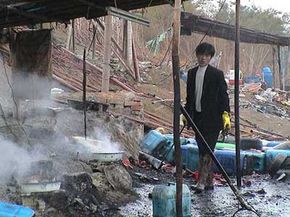
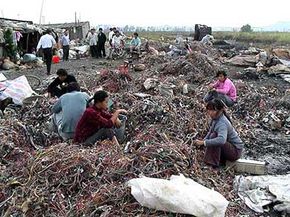
So what happens to all that e-waste? E-waste contains a bonanza of toxic and hazardous components that, for the most part, are currently being shunted into landfills. Much of the remaining portion is exported to developing nations, where many laborers, working under unsafe, unregulated conditions, recycle this e-waste. The work these laborers do, while it does provide some raw materials that can be reused, comes with some serious consequences.
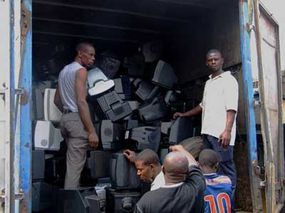
At present, we're just beginning to realize how serious those consequences are. Long-term exposure to small doses of toxins is less understood than the effects of those toxins in larger doses. In all likelihood, it's dangerous to spend your days touching fragments of toxic metals like lead and mercury. Common sense implies that inhaling the fumes from flame-retardant chemicals and highly corrosive acids isn't a good idea. And dumping byproducts of this recycling process into drinking-water sources can't be good for anyone.
The upshot is people have begun taking notice of these conditions, and several initiatives to protect the environment and human health have gained traction recently. Governments from around the world are passing regulations to curtail e-waste, and an increasing number of industrial improvements pop up every day.
On the next page, we'll look at what exactly is in e-waste that makes it so hazardous and why your old toaster isn't trying to kill you (well, at least not on purpose).
Advertisement