10 Most Expensive Data Centers in the U.S. and China

By: Grant Virellan  | 
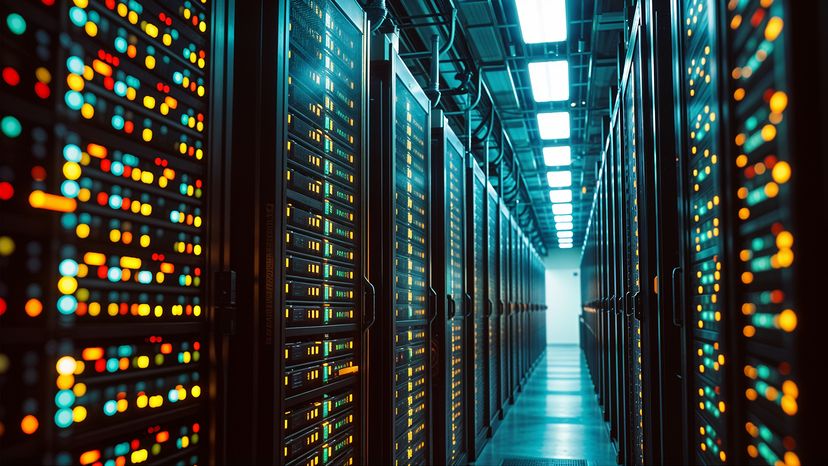
Data centers don't look terribly glamorous but they sure run a high bill. KM Stock / Shutterstock

The most expensive data centers are getting pricier because the digital world now wants more computing, more cooling, and more electricity all at once.

The boom in cloud computing, artificial intelligence, and big data analytics has turned data center infrastructure into one of the costliest kinds of modern construction, with McKinsey estimates suggesting the world may need trillions of dollars in new investment by 2030 as global demand keeps climbing.

Advertisement

That helps explain why the biggest facilities are no longer just warehouses full of servers. They are large-scale data centers with a significant physical footprint, specialized network connectivity, backup systems, water or liquid cooling, and the power capacity to support AI workloads that never really sleep.

This list looks at 10 of the costliest campuses and projects in the conversation. It starts with the most expensive planned data centers, then moves into existing giants whose size, energy requirements, and data center capacity show why the largest data centers have become such a competitive edge for tech giants, financial institutions, and cloud services providers.

Advertisement

1. Tract Data Center Campus, Lockhart, Texas

The Tract Data Center Campus near Lockhart is a planned data center campus.

Why so expensive? A campus at that scale is not just paying for servers. It is paying for land, substation work, cooling systems, network links, security, phased construction, and the kind of infrastructure needed to keep enormous facilities fully powered around the clock.

Advertisement

In other words, the bill is driven as much by power and cooling costs as by the computing hardware itself.

That spending lines up with the broader market picture. McKinsey says future demand could push worldwide data center investment to about $6.7 trillion by 2030, with AI models accounting for most of that pressure.

When people talk about demand for data center space, this is what they mean: bigger campuses, heavier energy requirements, and much more capital tied up before the first customer ever moves data into the building.

Advertisement

2. Project Sail, Newnan, Georgia

Project Sail, proposed near Newnan, carries an estimated price tag of $17 billion. That makes it one of the most expensive data centers on any public list, even before the campus is complete.

Georgia keeps attracting this kind of spending because it offers access to major fiber routes, a large labor market and strong links to the Southeast.

Advertisement

Low latency matters when companies want fast cloud access for AI workloads, enterprise software, and consumer services. Prime locations near population centers often cost more up front, but they can give operators a real edge in the data center market.

These giant builds also reshape local economies. Construction crews, electrical contractors, cooling specialists, and suppliers all benefit, while local governments often see new tax revenue and daily commerce tied to the site.

Advertisement

3. Meta Richland Parish Data Center, Rayville, Louisiana

Meta's Richland Parish Data Center is another $10 billion-class build. That alone tells you how quickly expensive planned data centers are becoming normal in a sector that was already capital intensive.

Meta is building for artificial intelligence as much as for social media. Training and serving AI models takes dense clusters of chips, and dense clusters throw off a lot of heat. That is why modern campuses spend so heavily on cooling, backup power, and energy-efficient layouts that can support more computing per square foot.

Advertisement

This is also where sustainable energy solutions enter the picture. Operators know that energy consumption is no longer a side issue.

The International Energy Agency estimates that data centers used about 415 terawatt-hours of electricity in 2024, or roughly 1.5 percent of global electricity consumption, so renewable energy sources and clean energy contracts are becoming part of the business model, not just public relations.

Advertisement

4. Compass Datacenters Campus, Meridian, Mississippi

The Compass Datacenters campus planned for Meridian, Mississippi, is also valued at about $10 billion. That tie-in price with Meta's Louisiana campus says something important about the global data center market: Large builds are no longer unusual one-offs. They are becoming standard responses to growing demand.

Operators chase places that balance land costs, climate, utility availability, and connectivity. Some markets win because they are close to users. Others win because cooler weather can trim cooling costs. Modular designs can help too, since they let builders bring capacity online in stages rather than wait for an entire mega-campus to be finished.

Advertisement

Minnesota is not Silicon Valley, but that is part of the point. The data center market is moving well beyond the old core hubs, even as Northern Virginia remains the biggest U.S. cluster and places like Las Vegas, Phoenix, Dallas-Fort Worth, and Tahoe-Reno keep rapidly expanding.

5. Cologix Johnstown Campus, Johnstown, Ohio

Cologix's Johnstown Campus in Ohio is priced at $7 billion, making it one of the largest disclosed builds now on the board. It also shows how the cloud era changes geography.

Ohio has become a serious data hub because it sits near major population centers and offers strong utility and fiber connections. For companies that need low latency without paying coastal land prices, that combination can be attractive. Vantage Data Centers, Digital Realty, and other major operators have made similar bets in markets where access to grid power and network connectivity can scale quickly.

Advertisement

The spending here is a reminder that powering data centers is now a supply chains story too. Transformers, switchgear, backup generators, chillers, and semiconductors all have to arrive on time. When any piece slips, the entire project can slow down.

6. Switch Citadel Campus, Tahoe-Reno, Nevada

The Switch Citadel Campus in Tahoe-Reno is not ranked by a disclosed headline budget like the projects above, but its scale makes it impossible to ignore. It is designed for up to 7.2 million square feet of data center space and up to 650 megawatts (MW) of power.

At that size, household electricity consumption becomes a useful comparison. A mega-campus like this can draw enough energy to rival a small city, which is why operators increasingly talk about renewable energy, energy efficiency and energy-efficient cooling as core design goals.

Advertisement

Google has set a 2030 goal for carbon-free operation around the clock, and the broader industry is chasing similar clean energy strategies.

Nevada also shows why natural hazards matter. Operators think hard about natural disasters, water stress, and grid resilience before they commit billions. A site that lowers those risks can justify a higher up-front spend.

Advertisement

7. China Telecom Data Center, Inner Mongolia, China

The China Telecom Data Center in Inner Mongolia is often described as the largest data center in the world by floor area, at roughly 10.7 million square feet.

When a campus reaches that scale, the absence of a public price tag does not make it cheap. It just makes the accounting harder to see from outside

Advertisement

The region has become associated with giant compute campuses. China Mobile and other operators have also built in Northern Chinese markets where land is available and huge facilities can spread out.

Think of sites like this as industrial zones for information. They store, move, and process data for cloud platforms, telecom traffic and enterprise services at a scale that can feel close to the entire world's personal and commercial digital footprint, even though no single campus literally holds all of that data.

Advertisement

8. Harbin Data Center, Heilongjiang, China

The Harbin Data Center covers about 7.1 million square feet and is estimated to draw around 200 megawatts. That blend of size and power helps explain why the largest data builds are so expensive even when public cost figures are scarce.

The challenge is simple to state and hard to solve. More chips create more heat. More heat demands more cooling. More cooling raises energy use and equipment costs.

Advertisement

Electrical systems alone can account for 40 percent to 45 percent of a major facility's construction bill, which is why a single 100-megawatt campus can cost close to or above $1 billion before tenant equipment is added.

Harbin also shows why operators look beyond one trendy market. Northern climate conditions can support energy efficient operation, though they do not erase the huge capital burden of large-scale data centers.

Advertisement

9. Range International Information Hub, Langfang, China

The Range International Information Hub in Langfang spans roughly 6.3 million square feet and delivers about 150 megawatts. That makes it another giant campus built for scale, not for show.

A site like this succeeds because it offers access to dense network routes, major customer markets, and enough room for future demand. That combination matters for cloud computing, enterprise storage, and the kind of largest data processing jobs that sit behind streaming, search and big business systems.

Advertisement

For customers, the visible product is often just quick access. Behind the scenes, the real work is being done by miles of cable, switchgear, cooling equipment, and backup systems.

Some market roundups pile in miscellaneous information about every big campus they can find. The more useful view is to ask what these places actually do. They trade capital for reliability, low latency, and room to grow.

Advertisement

10. Lakeside Technology Center, Chicago, Illinois

The Lakeside Technology Center is smaller than the Chinese giants, but it still belongs on this list because it captures the economics of major U.S. facilities.

At about 1.1 million square feet and roughly 100 megawatts, the Chicago campus shows that a dense urban-adjacent site can be enormously valuable, even without topping the charts for size.

Chicago sits near major network routes and financial institutions, so a facility there can offer a strong connectivity advantage. That matters for banking, trading, and enterprise services where milliseconds count.

It also helps explain why operators keep investing in Northern Virginia and other prime locations despite high land and utility costs.

Other Notable Data Center Campuses

A few other campuses round out the picture. Google's Council Bluffs campus in Iowa spans about 2.9 million square feet, the Utah Data Center run by the National Security Agency covers about 1 million square feet, CWL1 Data Centre in Newport, Wales delivers about 148 megawatts and QTS Metro in Atlanta reaches about 120 megawatts.

Together they show how wide the field has become.

The growth numbers are just as striking. In the U.S., electricity demand for data centers is expected to increase at a CAGR of about 23 percent between 2024 and 2030, while Northern Virginia still leads national development and markets such as Phoenix, Salt Lake City, Dallas-Fort Worth, Atlanta, Las Vegas, and Reno are expected to add major new capacity.

Some forecasts say Las Vegas and Reno together could require 3,812 megawatts, enough to power about 3.1 million homes.

So yes, data centers are expensive. But as demand keeps rising, the bigger question may be how the industry keeps building enough of them, fast enough, while staying resilient, energy-efficient, and connected to renewable energy sources.

One last note: Not every giant campus is built to Tier III standards, and not every operator publishes identical cost data, so comparing the most expensive data centers always involves some estimation alongside hard numbers.

We created this article in conjunction with AI technology, then made sure it was fact-checked and edited by a HowStuffWorks editor.

Advertisement

Loading...