Introduction to How Robotic Surgery Will Work
Just as computers revolutionized the latter half of the 20th century, the field of robotics has the potential to equally alter how we live in the 21st century. We've already seen how robots have changed the manufacturing of cars and other consumer goods by streamlining and speeding up the assembly line. We even have robotic lawn mowers and robotic pets. And robots have enabled us to see places that humans are not yet able to visit, such as other planets and the depths of the ocean.
In the coming decades, we will see robots that have artificial intelligence, coming to resemble the humans that create them. They will eventually become self-aware and conscious, and be able to do anything that a human can. When we talk about robots doing the tasks of humans, we often talk about the future, but the future of robotic surgery is already here. Are we really ready for machines to take the place of human doctors in the operating room?
In this article, you will learn about surgical robots that have been or will be approved for use in operating rooms. We will also take a look at the advantages and benefits that robotic surgery will have over conventional surgical methods.
Robotic Surgeons
The first generation of surgical robots are already being installed in a number of operating rooms around the world. These aren't true autonomous robots that can perform surgical tasks on their own, but they are lending a mechanical helping hand to surgeons. These machines still require a human surgeon to operate them and input instructions. Remote control and voice activation are the methods by which these surgical robots are controlled.
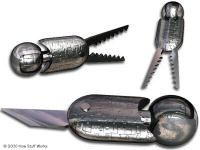
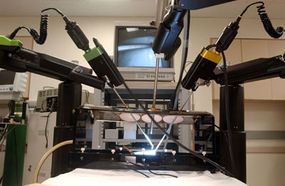
![]() Types of instruments used by the da Vinci Surgical System |
- da Vinci Surgical System
- ZEUS Robotic Surgical System
- AESOP Robotic System
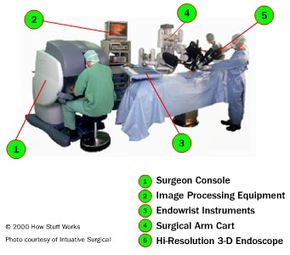
- A viewing and control console
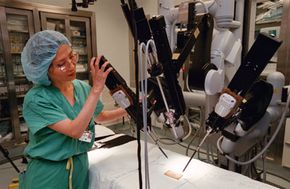
- A surgical arm unit
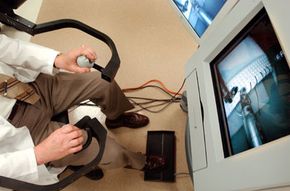
![]() Photo courtesy Intuitive Surgical. Surgeon's view when using the da Vinci Surgical System |
Sitting at the control console, a few feet from the operating table, the surgeon looks into a viewfinder to examine the 3-D images being sent by the camera inside the patient. The images show the surgical site and the two surgical instruments mounted on the tips of two of the rods. Joystick-like controls, located just underneath the screen, are used by the surgeon to manipulate the surgical instruments. Each time one of the joysticks is moved, a computer sends an electronic signal to one of the instruments, which moves in sync with the movements of the surgeon's hands.
Another robotic system that is close to being cleared by the FDA is the ZEUS System, made by Computer Motion, which is already available in Europe. However, both the da Vinci and ZEUS systems must receive governmental approval for each procedure that a surgeon plans to use it for. The $750,000 ZEUS has a similar setup to that of the da Vinci. It has a computer workstation, a video display, and hand controls that are used to move the table-mounted surgical instruments. While the ZEUS system has not yet been cleared for American use beyond clinical trials, German doctors have already used the system to perform coronary bypass surgery.
The ZEUS system employs the assistance of the Automated Endoscopic System for Optimal Positioning (AESOP) Robotic System. Released by Computer Motion in 1994, AESOP was the first robot to be cleared by the FDA for assisting surgery in the operating room. AESOP is much simpler than the da Vinci and ZEUS systems. It's basically just one mechanical arm, used by the physician to position the endoscope -- a surgical camera inserted into the patient. Foot pedals or voice-activated software allow the physician to position the camera, leaving his or her hands free to continue operating on the patient.
Advantages of Robotic Surgery
In today's operating rooms, you'll find two or three surgeons, an anesthesiologist and several nurses, all needed for even the simplest of surgeries. Most surgeries require nearly a dozen people in the room. As with all automation, surgical robots will eventually eliminate the need for some of that personnel. Taking a glimpse into the future, surgery may require only one surgeon, an anesthesiologist and one or two nurses. In this nearly empty operating room, the doctor will sit at a computer console, either in or outside the operating room, using the surgical robot to accomplish what it once took a crowd of people to perform.
![]() |
The use of a computer console to perform operations from a distance opens up the idea of tele-surgery, which would involve a doctor performing delicate surgery miles away from the patient. If the doctor doesn't have to stand over the patient to perform the surgery, and can remotely control the robotic arms at a computer station a few feet from the patient, the next step would be performing surgery from locations that are even farther away. If it were possible to use the computer console to move the robotic arms in real-time, then it would be possible for a doctor in California to operate on a patient in New York. A major obstacle in tele-surgery has been the time delay between the doctor moving his or her hands to the robotic arms responding to those movements. Currently, the doctor must be in the room with the patient for robotic systems to react instantly to the doctor's hand movements.
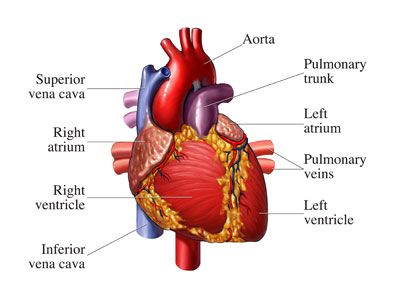
Having fewer personnel in the operating room and allowing doctors the ability to operate on a patient long-distance could lower the cost of health care. In addition to cost efficiency, robotic surgery has several other advantages over conventional surgery, including enhanced precision and reduced trauma to the patient. For instance, heart bypass surgery now requires that the patient's chest be "cracked" open by way of a 1-foot (30.48-cm) long incision. However, with the da Vinci or ZEUS systems, it is possible to operate on the heart by making three small incisions in the chest, each only about 1 centimeter in diameter. Because the surgeon would make these smaller incisions instead of one long one down the length of the chest, the patient would experience less pain and less bleeding, which means a faster recovery.
Robotics also decrease the fatigue that doctors experience during surgeries that can last several hours. Surgeons can become exhausted during those long surgeries, and can experience hand tremors as a result. Even the steadiest of human hands cannot match those of a surgical robot. The da Vinci system has been programmed to compensate for tremors, so if the doctor's hand shakes the computer ignores it and keeps the mechanical arm steady.
While surgical robots offer some advantages over the human hand, we are still a long way from the day when autonomous robots will operate on people without human interaction. But, with advances in computer power and artificial intelligence, it could be that in this century a robot will be designed that can locate abnormalities in the human body, analyze them and operate to correct those abnormalities without any human guidance.
Lots More Information
Related HowStuffWorks Articles
- How Anesthesia Works
- What does it mean when someone has a heart bypass operation?
- How Your Heart Works
- How Becoming a Doctor Works
- Computer Motion
- Intuitive Surgical
- ROBODOC Surgical Assistant System
- Robotic Surgery
- Robots used to perform heart surgery (MedServ Medical News)
- ZEUS robot system reverses sterilization to enable birth of baby boy