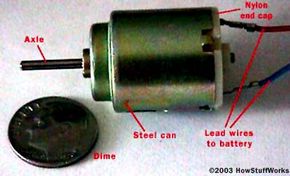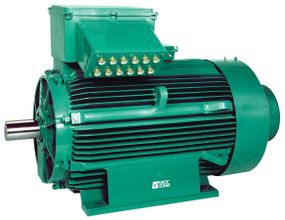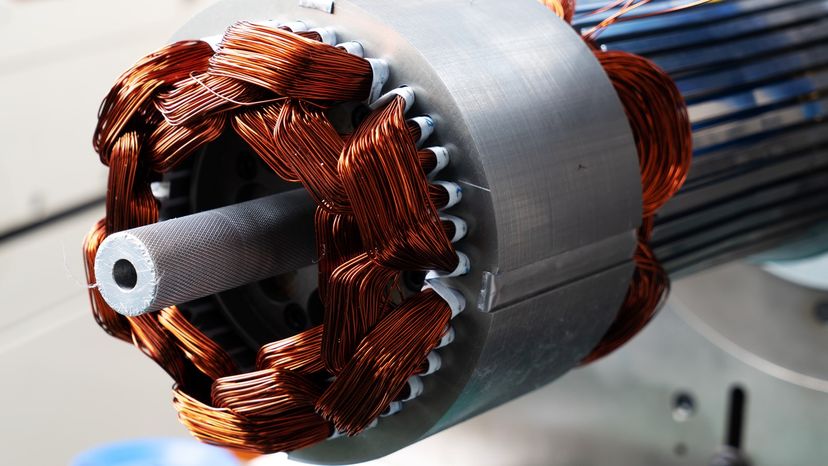
Electric motors are everywhere! In your house, almost every mechanical movement that you see around you is caused by an AC (alternating current) or DC (direct current) electric motor. In this article we'll look at both types.
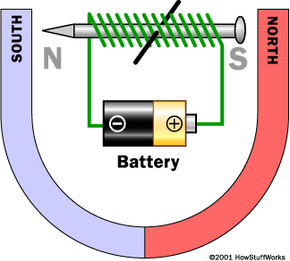
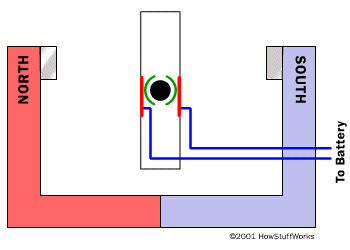
By understanding how a motor works you can learn a lot about magnets, electromagnets and electricity in general. An electric motor uses magnets to create motion. If you have ever played with magnets, you know about the fundamental law of all magnets: Opposites attract and likes repel.
Advertisement
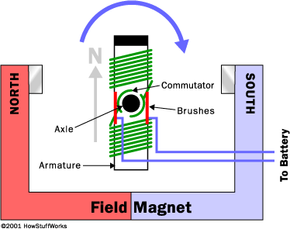
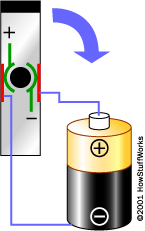
So, if you have two bar magnets with their ends marked "north" and "south," then the north end of one magnet will attract the south end of the other. On the other hand, the north end of one magnet will repel the north end of the other (and south will repel south). Inside an electric motor, these attracting and repelling forces create rotational motion.