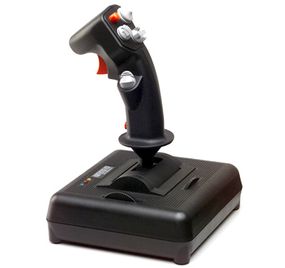
Conventional Analog: Into Digital
In the conventional system, a card (a printed circuit board) inside the computer handles this with a very crude analog-to-digital converter. The basic idea is to use the varying voltage from each potentiometer to charge a capacitor, a simple electrical device that stores electricity (see How Capacitors Work for more information). If the potentiometer is adjusted to offer more resistance, it will take the capacitor longer to charge; if it offers less resistance, the capacitor will charge more quickly.
By discharging the capacitor and then timing how long it takes it to recharge, the converter can determine the position of the potentiometer, and therefore the joystick. The measured recharge rate is a numerical value the computer can recognize. The computer performs this operation whenever it needs to get a read on the joystick.
Advertisement
You can potentially apply this system to an infinite variety of controls by connecting a potentiometer to different rotating components. For example, conventional steering wheel controllers work exactly the same way, with the wheel rotating the potentiometer contact arm directly. Some joysticks use an additional potentiometer for a Z-axis, activated by rotating the stick itself.
Some joysticks also have a "top hat" -- a thumb-activated miniature controller on top of the stick. This small joystick uses the same switch system as the simple joystick in the last section.
The conventional analog system works okay, overall, but it does have limitations. In the next section, we'll find out what the major problems are and then look at some recent solutions.